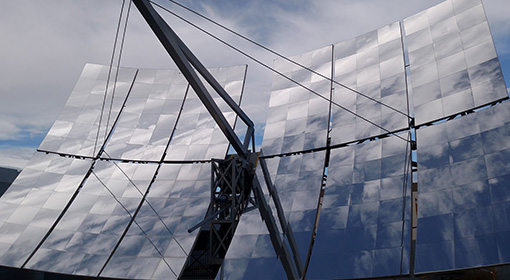
 Liquid cooling in the SST CPV module also provides the opportunity to extract byproduct solar heat energy for beneficial on-site thermal uses, in addition to the electricity from the CPV solar cells. This additional “free heat” energy value can improve project economics when offsetting fuel or electricity used for heat, or can be used for evaporation or desalination processes. Other CPV and PV systems do not have any way to collect and make use of the wasted heat.
In some markets, heat applications could include water heating and space heating, agricultural uses such as crop drying or cleaning and sanitation, preheating of water for steam generation, and to assist in water processing such as desalination using reverse osmosis (RO) or membrane distillation (MD). Brine from RO waste or mining can be evaporated and concentrated for easier disposal.
If there is no on-site use for heat then conventional radiators are used. Because CPV cells are 40% efficient, more sunlight is converted to electricity leaving less heat to reject compared to the heat that must be rejected by regular PV panels which typically are less than 20% efficient.
Using Dish CPV for processing water could use the flow water as the heat sink for cooling the CPV modules. Byproduct heat can increase efficiency in Reverse Osmosis (RO) systems. The temperature rise in the processed water would be small, but in certain cases increased temperature would reduce pumping pressure needed and reduce the kWh required per cubic meter of water.
Regular PV panels in desert conditions at times get very little natural air movement. Module temperature and efficiency loss can be high, resulting in much lower output than their rating. This can be made even worse on rooftops or from heat from parking lots. Dish units tracking the sun receive maximum light at all times for higher output, and liquid cooling helps to handle the heat.